If your perfect day starts with a sunrise run to the inlet and ends back at your own dock, choosing between Gulf Stream and Tropic Isle is worth a closer look. Both pockets sit in the heart of 33483 and both give you fast access to the Intracoastal Waterway. The feel on the water and at home is different, though. In this guide, you’ll see how canal layouts, bridge routes, dock setups, and nearby marinas compare so you can match the neighborhood to your boating style. Let’s dive in.
Quick take for boaters
- Choose Tropic Isle if you want dense canal living, many point lots, and a high chance of a backyard dock with direct ICW access. It is widely described as a boater’s enclave with deep-water canals designed for in-water storage and day use. Neighborhood guides highlight this canal-first design.
- Choose Gulf Stream if you want larger estate lots, more privacy, and a quieter street feel while still enjoying Intracoastal dockage in pockets like Place Au Soleil. Builders and local features describe Gulf Stream as an estate-scale, low-density village setting with substantial waterfront homes and docks. See examples of the estate character here.
- Both areas put you near the same inlets and marinas. Your decision comes down to dock density and canal maneuvering versus lot size and privacy.
Canal layout and neighborhood feel
Tropic Isle canal system
Tropic Isle sits on the west bank of the Intracoastal between Linton Boulevard and the Boca border. It is a mid-century, dredged canal network planned for boating. Many streets end in point lots, and deep-water canals tie directly to the ICW. That design means more homes with private slips and easier maneuvering for larger boats. Local features consistently call it a boater’s neighborhood.
On a typical day, you will see more neighbor activity on the water, especially during peak season. If you value a community where boats are part of daily life, this setup delivers. You also get a variety of canal orientations, so you can weigh sun exposure and wind lee by street and basin.
Gulf Stream and Place Au Soleil
Gulf Stream is a small coastal village with both oceanfront and Intracoastal-facing enclaves. Place Au Soleil sits on the Intracoastal side and is known for larger lots and estate-level homes. You will find private seawalls and docks on select parcels, but the area is not a dense canal grid like Tropic Isle. The tradeoff is space, privacy, and a refined residential streetscape.
If you want room for a bigger dock service footprint or multiple lifts on one property, Gulf Stream lots often allow it. The overall feel is low density and upscale. Builders and local profiles point to a classic estate character in Gulf Stream.
Ocean access and navigation
Nearest inlets commonly used from these neighborhoods include Lake Worth Inlet to the north and Boynton Inlet to the south. Run time depends on your exact slip, your cruising speed, and bridge timing. If you plan frequent offshore trips or Bahamas runs, map your preferred inlet and calculate run time before you make an offer.
Bridge clearance is a key factor. Many Tropic Isle routes are described as having no fixed bridges to the ocean, which helps towered center consoles and sportfish boats. Always confirm the specific route for your vessel height and note drawbridge schedules. Neighborhood sources emphasize the no fixed bridges advantage in Tropic Isle.
Depth varies by canal and block. Storms can shift bottom contour and private channels may differ from main ICW depths. Ask for recent soundings, dredging history, and any shared canal maintenance agreements. If you run a high-draft boat, verify approach depth at mean low water.
Typical homes and docks
Tropic Isle setups
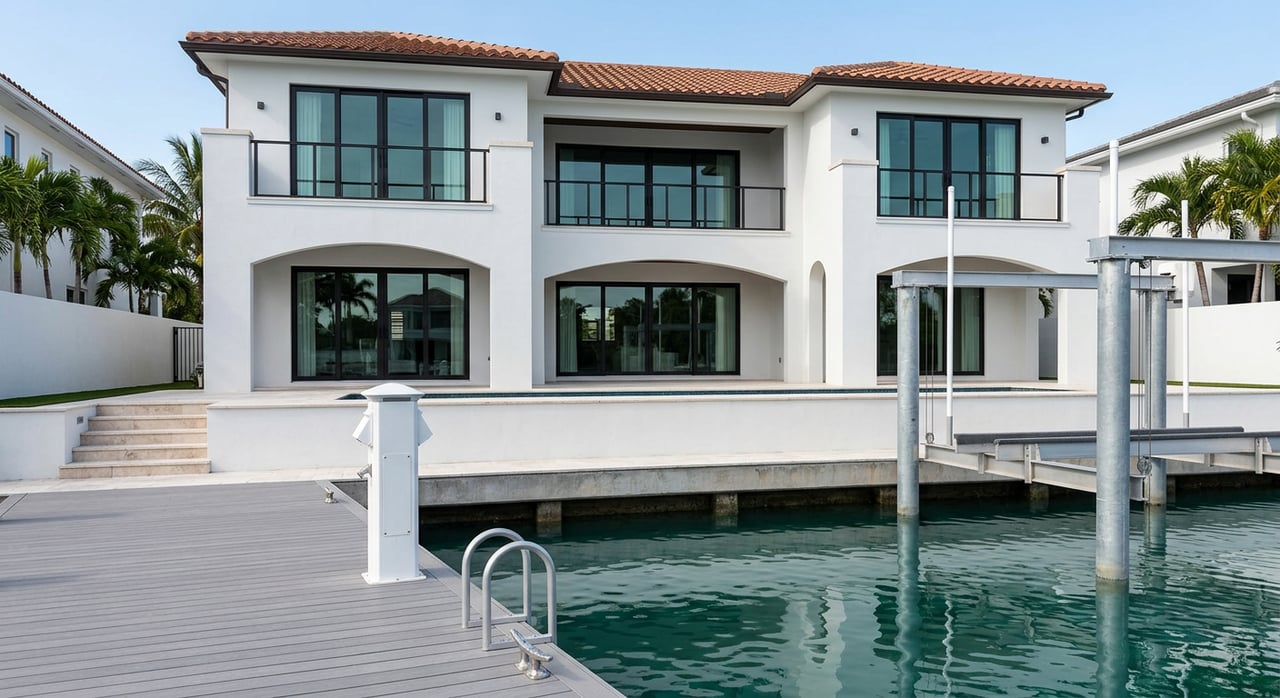
Expect a mix of original coastal ranches, modernized remodels, and new-build waterfront estates. Backyard docks are common. Many owners add fixed docks, floating fingers, and boat lifts sized to their vessel. When you tour, look closely at lift capacity, finger spacing, and documented slip dimensions. If a slip is shared or association managed, confirm the assignment rules and transferability.
Gulf Stream setups
Gulf Stream’s Intracoastal properties often feature private seawalls, substantial fixed or floating docks, and multi-lift systems on larger lots. With more land, some homes include separate tackle space or a dedicated boat garage. For big sportfish or convertibles, review the permit history and check clearances for pilings, lifts, and adjacent slips. Gulf Stream’s estate-scale homes support more robust waterfront improvements.
Nearby marinas and yacht clubs
- Delray Beach City Marina. A municipal facility on the ICW with a small number of slips, generally up to about 55 feet. It works well for transient needs or a backup plan if your private dock is under repair. Marinalife details the City Marina and local boating overview.
- Seagate Yacht Club. A full-service marina tied to a club and hotel, offering larger slips, with published accommodations up to about 120 feet. It is a convenient upscale option near downtown and the beach. See Seagate details within the local boating overview.
- Commercial marinas in Delray and nearby. Marina inventories evolve, but you will find wet slips, fuel, and service options close by in Delray and Boynton. A regional directory is useful when you need haul-out capability or specialty service. Browse Southeast Florida marina listings.
- Boynton Harbor Marina and Gateway Marina. South of Delray, these facilities are popular with owners near the Delray–Boca corridor for fueling, transient berths, and service. They are practical if your boating routine tilts south. See the regional directory for location and services.
- Boat clubs and rentals. If you want access without full ownership, local boat clubs and rental fleets can fill the gap for guests or seasonal residents. This roundup highlights several Palm Beach County boat-club options.
Permits, insurance, and dock due diligence
Waterfront purchases come with a few extra steps. Build these checks into your offer timeline:
- Dock, lift, and seawall permits. Confirm recorded permits for current structures and any upgrades. Many improvements require approvals from the town, county, state, and sometimes federal agencies.
- Depth soundings and dredging history. Ask sellers for recent measurements at mean low water and any shared maintenance or dredging agreements affecting your approach.
- Deeded slip status. If the slip is part of a condo or an association, confirm whether it is deeded or assignment-based and review transfer rules.
- Bridge and channel routing. For towered center consoles, sportfish, and sailboats, verify fixed-clearance points and drawbridge schedules on your path to your preferred inlet.
- Hurricane plan. Ask for a written storm plan for your property or marina. Confirm haul-out options and high-tie procedures, and review past performance during major storms.
- Flood and insurance. Both neighborhoods sit in FEMA flood zones. Request elevation certificates and prior insurance details so you can plan coverage and mitigation.
Which one fits your lifestyle
- You want maximum dock options and quick ICW runs. Choose Tropic Isle. You will find more point lots, more slips per block, and a community built around boating. Local features reinforce its boat-first design.
- You want space, privacy, and an estate setting. Choose Gulf Stream. You can still have excellent Intracoastal access, often with larger lots and more room for multi-lift setups. Gulf Stream’s estate character is well documented.
- You own a larger yacht or plan frequent offshore trips. Map your exact route to Lake Worth or Boynton Inlet, verify bridge clearance, and line up a marina with haul-out capacity. Use regional directories to identify facilities that match your LOA, beam, and draft.
Next steps
If you are torn between these two pockets, schedule a tour by water and by car. Visit at different tides and times of day. Time the run to your preferred inlet, test your turning radius in the canal or approach, and measure the dock against your vessel dimensions. If a property checks out on paper, we will pull permits, soundings, and insurance records early so you can write a confident offer.
Ready to compare active listings and plan a route? I can help you line up the right showings, connect you with local marinas, and coordinate due diligence on docks and seawalls. Let’s find the right fit for your boating life. Schedule a free market consultation with Matt Campbell.
FAQs
What is the main difference for boaters between Gulf Stream and Tropic Isle?
- Tropic Isle offers a dense canal network with many point lots and backyard docks, while Gulf Stream provides larger estate lots with select Intracoastal docks and a quieter, low-density village feel.
How fast can I reach the ocean from 33483 by boat?
- Run time depends on your slip location, cruising speed, and bridge timing, with Lake Worth Inlet and Boynton Inlet being the common ocean access points for both neighborhoods.
Are there fixed bridges on Tropic Isle routes to the ocean?
- Many Tropic Isle routes are described as having no fixed bridges, which benefits towered center consoles and sail rigs, but always verify the exact clearance on your chosen path before you buy.
What dock documents should I request before making an offer?
- Ask for recorded dock, lift, and seawall permits, recent depth soundings at mean low water, dredging history, and confirmation of whether the slip is deeded or association-controlled.
Where can I keep a larger yacht near Delray Beach?
- Seagate Yacht Club offers larger slips, and the regional network from Boynton through Boca and Palm Beach includes marinas with deep-water capacity and haul-out services suitable for bigger vessels. Start with this regional directory.