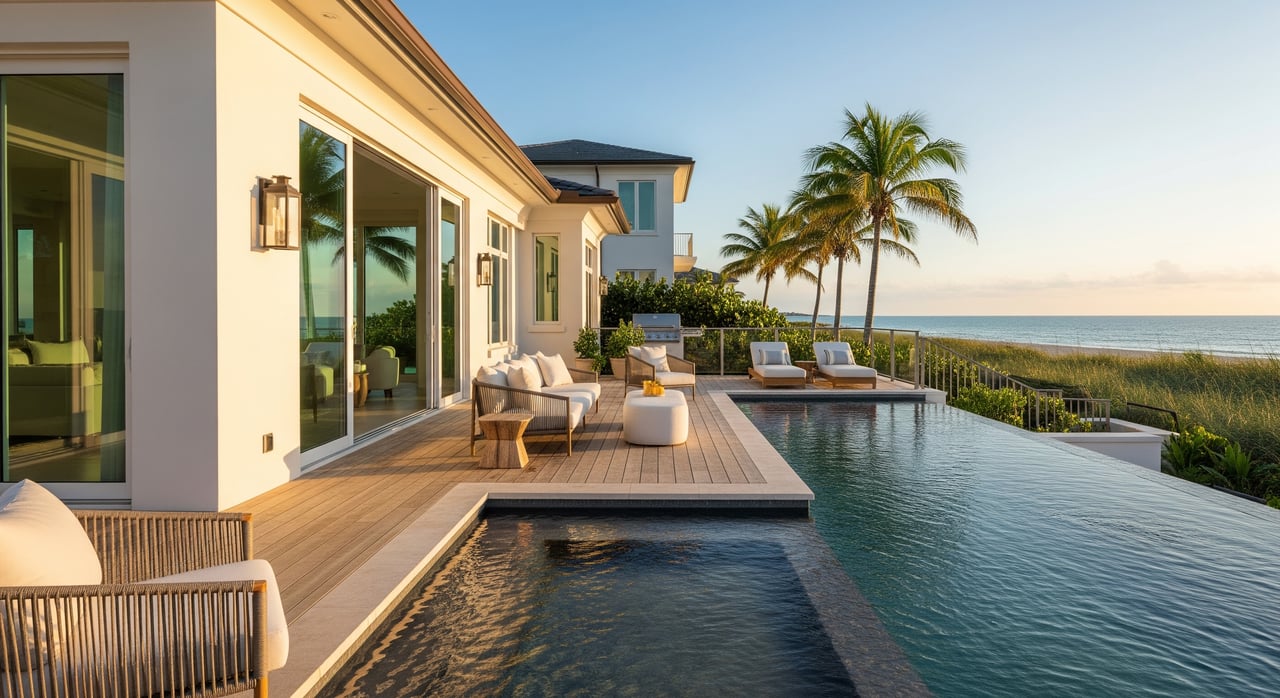
Thinking about turning a Gulf Stream home into a seasonal rental? You’re not alone. With strong winter demand and a premium coastal setting, the right property can perform well if you price smart and plan for coastal costs. In this guide, you’ll learn how to build accurate comps, model cash flow, navigate local rules, and choose upgrades that boost nightly rates. Let’s dive in.
Gulf Stream seasonal demand
Gulf Stream follows the broader Palm Beach pattern. Peak season typically runs from late fall through early spring, when snowbirds arrive and events fill the calendar. You’ll see higher nightly rates and stronger occupancy during this stretch. Late spring through early fall is the shoulder and off season, with softer demand and hurricane season influencing booking behavior.
Expect revenue to be a weighted average of very different seasons. One great month does not make a strong year without a plan for slower periods. Proximity to the beach, walkability, private beach access or club options, parking, bedroom and bathroom count, luxury finishes, and lot privacy all affect demand. During holidays, short-term managers often use higher rates, longer minimum stays, and tighter booking rules.
Build comps that stick
Start with season buckets
Create three buckets so you are not guessing month by month. A common starting point is peak in November through April, shoulder in October and May, and off season in June through September. Adjust those months if local data says otherwise. This helps you price with intention rather than averaging one number across the year.
Pull ADR and occupancy
Use short-term rental market intelligence providers to see average daily rate, occupancy, and seasonality curves for the smallest possible area you can select around Gulf Stream. Look at the time series, not just a single snapshot, so you catch trend lines. If you cannot get neighborhood-level data, blend Gulf Stream with nearby coastal comps and document your assumptions.
Read live listings
Search active listings on major platforms for Gulf Stream and nearby coastal towns. Match by bedroom count, amenities, walkability, and distance to the beach. Note nightly rate ranges, minimum-stay rules, cleaning fees that guests pay, and calendar blocks that hint at occupancy. Save a set of comps so you can revisit and update.
Weigh property features
Not all bedrooms are equal. Homes that offer easy beach access, dedicated parking, outdoor showers, and private outdoor space tend to convert more inquiries to bookings. Clear arrival instructions and smart-entry tech remove friction. Well-finished kitchens and baths with durable coastal materials can support higher pricing in peak season.
Model your numbers
Core revenue formulas
- Gross Rental Revenue = sum of monthly nights available multiplied by occupancy percent multiplied by ADR across 12 months.
- Gross Booking Income = Gross Rental Revenue plus guest-paid fees where applicable.
- Operating Income (before fixed costs) = Gross Booking Income minus platform fees, management fees, cleaning, utilities, and supplies.
- Net Operating Income (NOI) = Operating Income minus property taxes, insurance, HOA fees, and routine maintenance or reserves.
- Cash Flow After Debt = NOI minus mortgage payments.
- Cash-on-Cash Return = Annual Cash Flow After Debt divided by total equity invested.
- Break-even Occupancy = Annual fixed costs plus debt service divided by ADR times 365 minus variable costs per occupied night.
Keep your formulas in a simple spreadsheet so you can change ADR or occupancy by season and see how it rolls up.
Expense checklist
Itemize everything so surprises do not erase your returns:
- Mortgage payments and interest if financed
- Property taxes and assessments
- Insurance: dwelling, windstorm, flood, and liability with STR coverage
- HOA or association fees if applicable
- Utilities: electric, water, sewer, trash, internet, and streaming
- Professional management fee if you use a manager
- Platform fees for booking sites
- Cleaning per turnover multiplied by the number of stays you expect
- Routine maintenance and preventative maintenance reserves
- Capital reserves for big-ticket items like roof, HVAC, and appliances
Professional STR managers often charge 15 to 35 percent of booking revenue for full service. Cleaning is per stay and varies by home size and finish level. Confirm local rates with managers and cleaners before you buy.
Taxes and remittance
Short-term rentals in Florida are typically subject to state sales tax and county tourist development taxes. Owners often need to register and remit on a monthly or quarterly schedule. Confirm registration steps and deadlines with the Florida Department of Revenue and Palm Beach County. If your municipality or HOA requires a business tax receipt, registration, or inspection, plan for that lead time before launching.
KPIs to watch
Track metrics that tell the true story, not just top-line revenue:
- ADR: Average price per booked night
- Occupancy: Percent of available nights booked
- RevPAR: Revenue per available night, which is ADR times occupancy
- Gross rental yield: Annual gross income divided by purchase price
- NOI margin: NOI divided by gross rental income
- Cash-on-cash return: Cash flow after debt divided by equity invested
- Break-even occupancy: Nights you must book to cover fixed costs and debt
Run three scenarios
Build a simple three-case sensitivity so you see both upside and risk.
- Conservative
- Lower ADRs in each season and the lowest occupancy you have seen in comps
- Higher cleaning frequency and a larger maintenance reserve
- A higher management fee and platform fee assumption
- Include several weeks of downtime for repairs or storms
- Base
- Midpoint ADR and occupancy from your data sources
- Realistic cleaning cadence and utility costs for your home size
- Your most likely management approach, either self-manage or a local pro
- Aggressive
- Upper-end ADRs with strong peak and healthy shoulder occupancy
- Tighter minimum-stay rules during holidays and major events
- Modest cost improvements from better pricing, smarter turnovers, or upgrades
If your deal only works in the aggressive case, keep looking or sharpen your plan. Always ask what changes would get the conservative case to break even.
Coastal renovation and resilience
Flood and wind readiness
Check FEMA flood maps and your property’s Base Flood Elevation. Homes in coastal zones may need elevated utilities, flood vents, or special construction details, which can affect cost and insurance. Windstorm policies often have percentage deductibles tied to dwelling value. Impact windows or quality shutters can improve safety and may reduce premiums, so get quotes on both coverage and upgrades during due diligence.
Guest experience upgrades
Certain upgrades earn their keep through better reviews and higher ADR:
- Reliable HVAC sized for coastal humidity and group stays
- Fast, stable internet and easy streaming access
- Smart locks and clear parking guidance
- Durable, clean furnishings with hotel-grade linens and towels
- Outdoor amenities like a grill, outdoor shower, and tidy yard space
Choose materials that stand up to salt, sun, and moisture. Think corrosion-resistant hardware, tile or other water-resistant flooring on lower levels, and marine-grade paints and finishes.
Operating playbook
Plan for same-day turnovers during peak season. Line up primary and backup cleaners well before winter. Decide on a damage deposit or host protection approach and outline clear house rules. Include an emergency plan with evacuation zone info, contact numbers, and storm procedures in your guest guide.
Renovation budgets vary widely, so get local quotes. As a rough orientation, a cosmetic refresh can land in the tens of thousands, a mid-level kitchen and bath update can be significantly higher, and a full luxury coastal build-out can cost more depending on size and finishes. Coastal code requirements and materials can add cost, so build a buffer.
Regulations and insurance
Is it allowed locally
Before you buy, confirm that short-term rentals are allowed for the specific address. Check the Village of Gulf Stream municipal code for any transient rental rules, registration, minimum stays, occupancy limits, parking rules, and noise ordinances. If the property is in an HOA, review covenants and restrictions in detail, since many coastal communities limit or prohibit seasonal rentals. If you plan renovations, confirm permitting requirements early.
Insurance must-haves
A standard homeowner policy may exclude short-term rental activity. Price a landlord or STR-specific policy with liability coverage that matches your risk. If the home is in a Special Flood Hazard Area, flood insurance may be required by lenders, and private flood options may be worth comparing. Review your windstorm deductible structure and consider a commercial umbrella policy if your occupancy and guest count are high.
Before you write an offer
Use this fast-track checklist to pressure-test your deal:
- Confirm STR legality with the Village of Gulf Stream and the property’s HOA
- Pull 12-month ADR and occupancy curves from trusted STR data sources and compare to live listings
- Map months into peak, shoulder, and off season and build a season-weighted model
- Itemize all operating costs, including cleaning, platform fees, and management
- Budget for coastal-specific upgrades like impact windows and elevated utilities
- Get insurance pre-quotes for dwelling, windstorm, flood, and liability; note deductibles
- Run conservative, base, and aggressive scenarios with downtime assumptions
- Line up a local property manager and contractor for real-world cost checks
- Document your break-even occupancy and cash-on-cash return targets
Work with a local pro
You do not need to do this alone. A local, Gulf Stream–focused agent can flag neighborhood-level rules, pull accurate STR comps, and introduce vetted managers and contractors. Bring in an expert before you write an offer, when your model depends on renovation scope, or when you need a long-term rental comparison for financing. If you want a clear, local view of what will book and what it will cost, I am ready to help.
If you are serious about a Gulf Stream seasonal rental, let’s talk through the numbers, the rules, and the path to launch. Schedule a free market consultation with Matt Campbell, and I will help you validate comps, model returns, and build your next steps.
FAQs
How many nights can a Gulf Stream seasonal rental book in a year?
- Model bookings by season buckets and use local STR data for ADR and occupancy, then run conservative, base, and aggressive cases with higher demand from November through April.
What expenses do investors underestimate in Palm Beach coastal rentals?
- Insurance premiums and wind deductibles, cleaning turnover frequency, routine maintenance, utilities, and the total impact of platform and management fees.
Are short-term rentals allowed for every home in Gulf Stream?
- No, rules vary by municipality and HOA, so you must confirm the Village of Gulf Stream code and the property’s covenants before making an offer.
What taxes do I need to collect on seasonal rentals in Palm Beach County?
- Expect Florida state sales tax on short stays and county tourist development taxes, with registration and on-time remittance typically required.
Which upgrades most improve ADR near the beach?
- Durable coastal finishes, impact windows or shutters, fast internet, smart locks, hotel-grade linens, and outdoor amenities like a grill and outdoor shower.
How should I budget for hurricanes in my ROI model?
- Include potential downtime for storms, higher wind or flood deductibles, and a maintenance reserve for repairs and clean-up, plus a clear emergency plan.
Do I need a property manager for a Gulf Stream seasonal rental?
- It is optional, but full-service managers often charge 15 to 35 percent; weigh time, guest service quality, and pricing expertise against the fee.