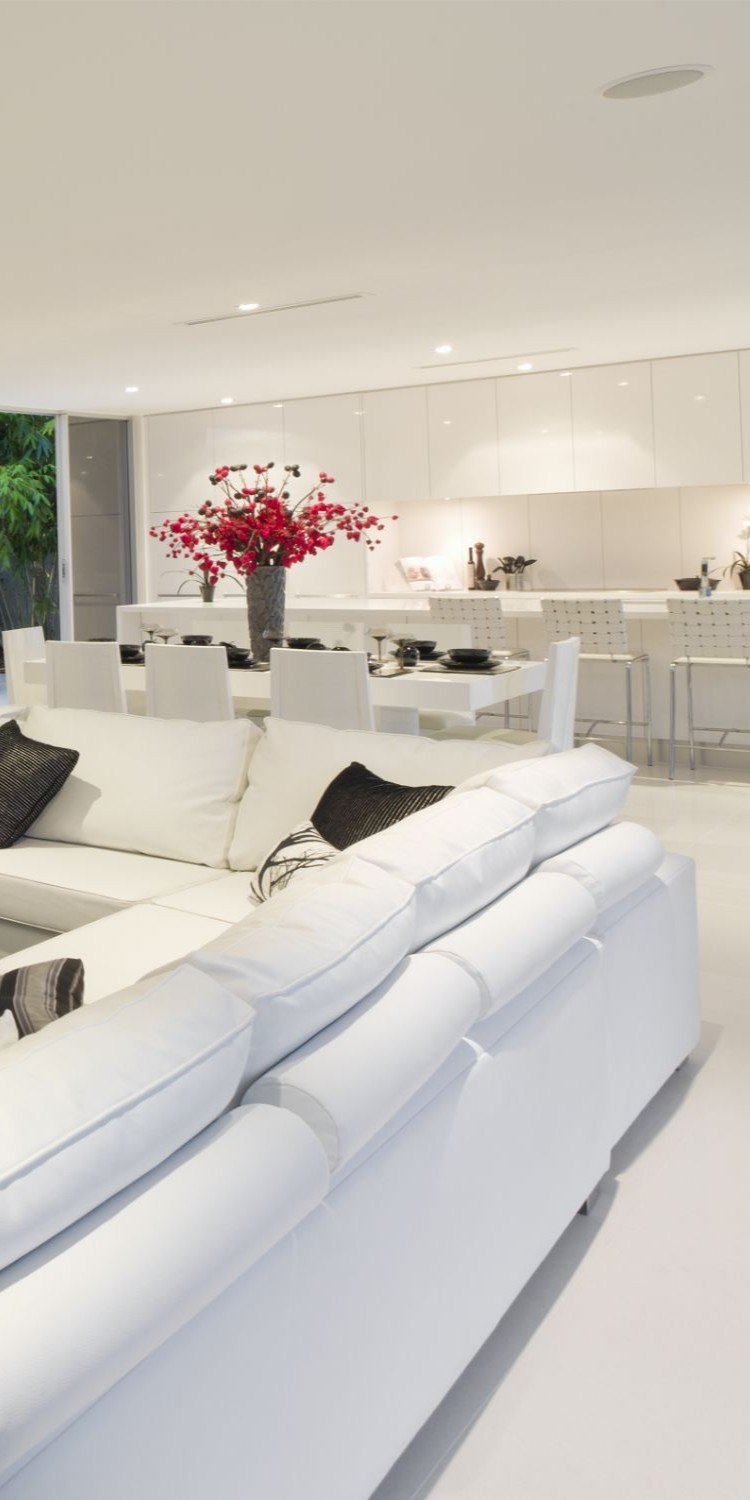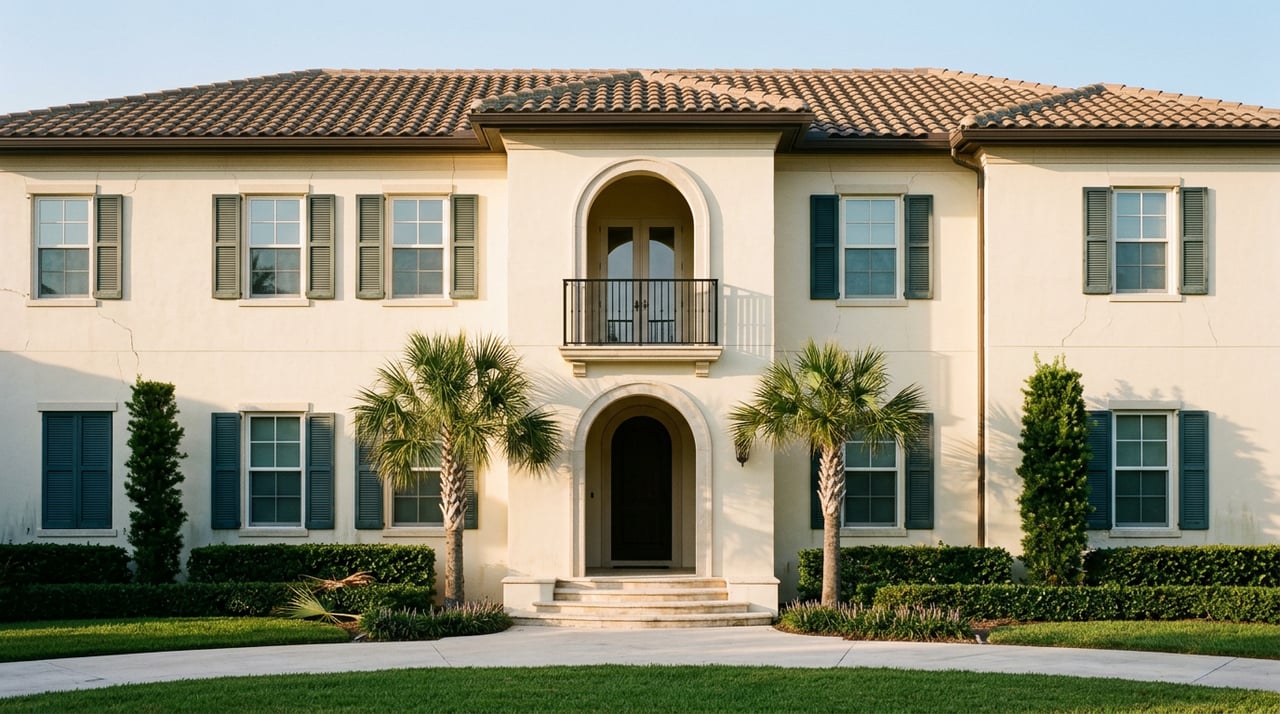
"I think this house would look great in Miami, but it looks almost alien in Palm Beach."
That was one of the town's own architectural commissioners, describing a design that Todd Michael Glaser wanted to build on a dead-end street in the Estate Section. Glaser is not a first-time buyer figuring out zoning on the fly. He is the developer who paid $85 million for Tarpon Island and $18.5 million for the waterfront lot at what is now 360 El Brillo Way, the property once owned by Jeffrey Epstein. He tore the old house down, brought in an award-winning architect, and still walked out of the review process with a rejected design and a lot he eventually sold instead of building on.
I bring this up because most people shopping for a home in Palm Beach are looking at one number: the price. As of July 2026, the average home value on the island sits north of $2.1 million, down about a point from a year earlier. That number tells you almost nothing about what a specific parcel will let you do with it after you own it. The variable that actually matters, the one that turns a straightforward renovation into a year of hearings, is whether the property carries landmark status or sits inside one of the town's historic districts. That designation does not care what you paid, and it does not care whether you wanted it.
Landmark Status Is Not Something You Opt Into
Palm Beach has protected buildings under a local ordinance since 1979, when the Town Council created the Landmarks Preservation Commission in response to a preservationist's book cataloging the island's older architecture. Today the LPC's list runs past 328 properties, sites, and vistas. Once a building lands on that list, any exterior change visible from the street, and sometimes interior features, needs the Commission's sign-off before a contractor can pull a standard building permit.
Here is the part that surprises buyers who assume landmark status is something they can decline: a property owner's objection does not stop a designation. The town council can landmark a house over the owner's formal opposition, and it has. In May 2026, the council voted 3-2 to designate a modest bungalow at 141 Chilean Avenue, in the Royal Park subdivision east of Town Hall, as a landmark. The vote was tied 2-2 before Mayor Danielle Moore broke the deadlock. The company that had owned the house for nearly 34 years argued through counsel that the property didn't meet the ordinance's criteria for historical or architectural significance. Two council members agreed the home wasn't a strong example of its style. The majority didn't. Mayor Moore's read was simple: "I think it's charming and I think it's worth keeping."
That case matters more than any oceanfront trophy story because it wasn't a trophy. It was an ordinary bungalow, inherited across a family, with an owner who actively fought the designation and lost. If a modest house on Chilean Avenue can get landmarked over objection, no buyer on the island gets to assume their future renovation plans are safe just because the house looks unremarkable today.
What Actually Triggers the Longer Review
Landmark status is the clearest version of this friction, but it's not the only layer. Beyond the LPC's own local list, thirteen individual structures and one historic district within the Town of Palm Beach are separately listed on the National Register of Historic Places, a federal designation that runs alongside, not instead of, the town's local review. Before you write an offer on an older home in the Estate Section, Midtown, or Royal Park, it's worth finding out whether any of the following apply:
- Is the specific address on the town's landmark list, or has it been flagged as "under consideration"
- Does the parcel sit inside a historic district overlay, even if the house itself isn't individually landmarked
- Is the home old enough or architecturally distinctive enough that a future application could trigger a landmark review you didn't initiate
- Does the renovation scope include anything visible from the street, since that's the threshold that pulls in the Landmarks Preservation Commission rather than a standard permit review
None of this shows up on a listing sheet. It shows up when your contractor submits plans and gets routed to a different desk than the one they expected.
Even Experienced Developers Get Slowed Down
The El Brillo Way story is useful precisely because it shows this friction has nothing to do with a buyer's sophistication or budget. Glaser demolished the old Epstein house in 2021 and initially tried to build a mid-century modern spec mansion on the site. The town's architectural board rejected it, with one commissioner calling the design too commercial for the street and Shiverick delivering the "alien in Palm Beach" line. Glaser eventually stopped trying to get his own design approved and sold the empty lot instead.
The buyers who took it over, Boston venture capitalist David Skok and his wife Mally, an interior designer with a store on Worth Avenue, came back with a different design. A Cape Dutch style building that read as more in line with the neighboring homes. That version cleared review and was nearly finished the last time it was reported on. Same lot, same regulatory environment, two very different outcomes depending on what the design proposed rather than who was proposing it or what they paid for the dirt.
If you're comparing Palm Beach to other towns along this stretch of coast, that's the mechanism worth understanding before you fall in love with a listing photo. The price gets you in the door. The design review process decides what you're actually allowed to do once you're inside.
Why the Median Price Can't Warn You About This
The town's overall home value trend, that roughly $2.1 million average as of this summer, describes a market moving sideways. It says nothing about the split between a non-landmarked home where a kitchen renovation moves through a standard permit in weeks, and a landmarked or district-protected home down the same street where the identical scope of work needs a Certificate of Appropriateness, historically accurate materials, and a longer timeline before a contractor even breaks ground.
That's the number I'd want a buyer to underwrite before the closing price. Two houses can carry nearly the same list price and completely different renovation math once you account for review time, material sourcing, and the carrying costs that accumulate while your plans sit in front of a commission instead of a building inspector.
A Few Questions Worth Asking Before You Write an Offer
Can I close on a Palm Beach property before my renovation plans are approved? Yes, and most buyers do. The tradeoff is that the review clock typically starts after closing, not during your contract period, which means the carrying costs during design and review land on the buyer rather than the seller.
Does landmark status hurt resale value? It depends on the buyer you eventually sell to. Some people pay a premium for the guarantee that a neighbor can't tear down next door and build something mismatched. Others see the material and process restrictions as a real limit on what they can change later. Either way, it's a fact to price into your offer, not a surprise to discover during a renovation.
How do I find out if a specific address carries this exposure before I make an offer? This is exactly the kind of due diligence I build into every Palm Beach showing. A quick check against the town's landmark list and historic district maps, done before you write a number on paper, tells you whether the home you're touring comes with a straightforward permit path or a longer one.
If you're weighing a Palm Beach purchase against Delray Beach, Boca Raton, or another spot along this corridor, I'd rather walk you through what a specific address actually carries in terms of review exposure than let you find out from a contractor six months after closing. That's the kind of local groundwork Matt Campbell does before you ever write an offer.
Schedule a free market consultation with Matt to talk through what a specific Palm Beach property, landmarked or not, would actually cost you to renovate before you buy it.