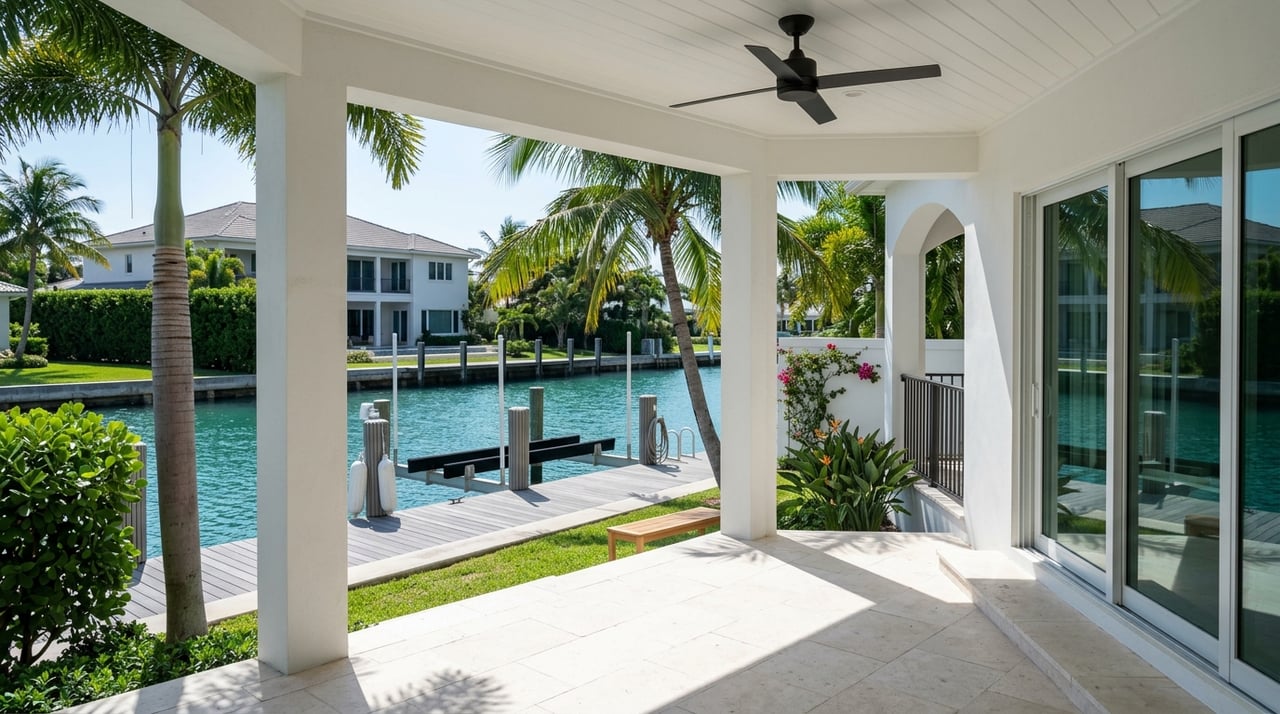
Buying a waterfront home in Manalapan can feel like stepping into a rare slice of South Florida living. You may be drawn to the views, the boating access, or the privacy that comes with a barrier-island setting, but waterfront ownership here also comes with details you do not want to overlook. If you are considering a purchase, it helps to understand how location, flood exposure, docks, and permits can shape both your experience and your costs. Let’s dive in.
Why Manalapan waterfront stands out
Manalapan is not a typical coastal market. The town states that it is completely surrounded by water, which gives buyers access to a setting shaped by the Atlantic Ocean and the Intracoastal Waterway.
That setting creates a very specific type of inventory. Recent listing examples point to a highly customized luxury market, with lot sizes ranging from around 0.36 acre to more than 3 acres and asking prices from roughly $6.5 million to $99 million.
You are not usually comparing one standard floor plan to another here. Instead, you are evaluating one-of-a-kind homes, custom estates, redevelopment opportunities, and properties with very different water access, frontage, and site conditions.
Start with the type of waterfront
Not all waterfront homes in Manalapan offer the same lifestyle. Before you focus on finishes or square footage, you should confirm what kind of water frontage the property actually has.
Some homes may front the ocean. Others may sit along the Intracoastal, lagoon, canal, or offer dual frontage. That difference can affect privacy, boating setup, outdoor space, and how you use the property day to day.
A practical first question is simple: what water are you actually buying? Once you know that, it becomes much easier to compare homes in a meaningful way.
Common waterfront setups to ask about
- Ocean frontage
- Intracoastal frontage
- Lagoon frontage
- Canal frontage
- Dual frontage properties
Each setup can create a different ownership experience. A home with broad water views may still function very differently from one with a private dock and direct boating route to the inlet.
Boating access matters more than "waterfront"
If you plan to keep a boat or want easy days on the water, route details deserve close attention. In Manalapan, listing descriptions often highlight private docks, lifts, seawalls, ocean access, and no fixed bridges because those features can strongly affect value and usability.
Some visible listings mention runs of about five minutes by boat to Boynton Beach Inlet. Others promote dock lengths like 50 or 75 feet, dual lifts, jet-ski lifts, or private dock service.
That is why you should look beyond the word waterfront. A home may sit on the water, but your actual boating experience depends on the dock setup, lift capacity, seawall condition, and the full route from the property to the inlet.
What to verify for boating use
- Whether there is a private dock already in place
- Whether the property has a boat lift or other lift system
- Approximate dock length
- Whether the route includes fixed bridges
- Estimated run time to the inlet
- Whether seawall details are documented
The Coast Guard notes that bridge guide clearances are the navigational clearances used in bridge permitting for a particular waterway. In practical terms, that means you should verify the entire route, not just the fact that the house is on the water.
Flood risk is part of every purchase
Flood due diligence is especially important in Manalapan. According to the town, every property in town is exposed to flood damage.
The town also states that local flooding can come from the Atlantic Ocean, the Intracoastal Waterway, hurricanes and tropical storms, king tides, spring storms, rogue waves, and extreme rainfall. For buyers, that means flood review should happen early, not after you fall in love with a house.
You should ask whether the property is in a flood zone and whether an elevation certificate is on file. The town says buyers can also ask whether the property sits in CHHA, CBRS, or LiMWA.
Documents worth requesting early
- Flood-zone determination
- Elevation certificate, if available
- Information on whether the property is in CHHA
- Information on whether the property is in CBRS
- Information on whether the property is in LiMWA
- Permit history available from the seller or Town Hall
This paperwork can help you understand risk, possible insurance needs, and future renovation planning before you get too far into the process.
Insurance costs need a closer look
Waterfront buyers often focus on purchase price first, but operating costs matter just as much. In Florida, flood insurance is usually not included in a standard homeowner’s policy, and it may be required by a mortgage according to the Florida Office of Insurance Regulation.
The same source notes that flood coverage is separate, and FloodSmart states that most homeowners insurance does not cover flood damage. It also notes that NFIP flood insurance covers direct physical flood losses to structure and belongings.
In Manalapan, the town participates in the National Flood Insurance Program. The town also says qualifying NFIP policies receive a 10% CRS discount.
That does not mean every policy will cost the same. It means you should review insurance early so you have a realistic picture of monthly carrying costs.
Permits can affect your plans
If you are buying a waterfront home with the idea of improving the dock, replacing a seawall, or adding a boat lift, do not assume those projects are simple. The Town of Manalapan requires permits for construction, and the town advises buyers to consult the building official before making changes.
For dock, seawall, and boat-lift work, the town’s checklist requires digital permit submission, sealed plans, a current survey, DEP approval, electrical plans, and compliance with the Florida Building Code 8th Edition 2023. That is a meaningful layer of review, especially if you are budgeting updates right after closing.
If a property needs work, ask what has already been permitted and what still needs approval. That can help you avoid surprises on timing, cost, and scope.
Lot size and layout deserve real scrutiny
In a market filled with custom estates, lot size can shape everything from privacy to parking to outdoor living. Recent visible listings show a wide range, from smaller Point Manalapan parcels around 0.36 and 0.40 acre to sites above 1, 2, and even 3 acres.
That spread matters because two homes with similar price tags may offer very different land use. One lot may support expansive outdoor living, while another may feel more constrained once you factor in the home footprint, pool area, parking, and dock access.
As you tour, think beyond the interior. Ask whether the lot truly fits the way you want to live, entertain, store gear, or improve the property over time.
Construction style varies widely
Another key point is that Manalapan inventory is not uniform in style or age. Visible listing examples include modern, transitional modern, modern Mediterranean, Mediterranean/European, and contemporary ocean-to-lagoon compounds.
You may also come across very different property conditions. Some homes are recent builds, some are major rebuilds or deep renovations, and some may be better viewed as redevelopment opportunities.
That means your search should stay focused on function as much as aesthetics. A newer home may offer newer systems and features, while an older property may offer land value, location, or a chance to create something custom.
Luxury features are common, but not equal
Many Manalapan listings advertise high-end amenities like pools, summer kitchens, club rooms, elevators, generators, impact glass, security systems, and private club access in some Point Manalapan properties. These features can add convenience and comfort, especially for seasonal or second-home buyers.
Still, you should confirm what is truly included and what condition it is in. In a custom-home market, feature lists can look similar on paper while actual quality, age, and maintenance differ significantly.
This is another reason due diligence matters. On a waterfront property, lifestyle features are important, but infrastructure is what often drives the bigger long-term decisions.
Questions to ask before touring
If you want to narrow the field quickly, start with a smart set of pre-tour questions. That can save time and help you focus only on properties that fit your goals.
Best pre-tour questions for Manalapan buyers
- Does the lot have ocean, Intracoastal, lagoon, canal, or dual frontage?
- Is there a private dock, lift, seawall, or mooring setup already in place?
- Does the boating route have fixed bridges?
- How long is the run to the inlet?
- Is the lot large enough for outdoor living, parking, storage, and pool space?
- Is the property a new build, a deep renovation, or a teardown or redevelopment candidate?
- Are flood-zone determinations, an elevation certificate, and permit history available?
These questions can quickly separate a beautiful listing from a practical fit.
Storm planning is part of ownership
Barrier-island living brings beauty, but it also requires preparation. On its hurricane page, the town notes that barrier-island residents may be required to evacuate depending on storm conditions.
That is not a reason to avoid the market. It is simply part of understanding what ownership here looks like.
If you are buying in Manalapan, it is wise to think about storm readiness as part of the full ownership picture. Features like generators and impact glass may be attractive, but they should be reviewed alongside flood exposure, insurance planning, and your comfort with seasonal preparation.
Buy with a clear process
The best Manalapan waterfront purchase is not just the home that looks impressive in photos. It is the one that matches your goals, supports the way you want to use the property, and holds up under careful due diligence.
When you evaluate waterfront here, focus on the fundamentals first: type of frontage, boating route, flood exposure, insurance, permit history, lot usability, and future improvement plans. Once those pieces make sense, you can judge the finishes, amenities, and lifestyle fit with much more confidence.
If you are thinking about buying a waterfront home in Manalapan, I can help you sort through the details, compare properties clearly, and build a smart plan for your search. Matt Campbell offers responsive, local guidance across Palm Beach County, from first showings to closing.
FAQs
What should you check first before buying a waterfront home in Manalapan?
- Start by confirming the type of waterfront frontage, flood-zone information, dock or seawall setup, bridge access on the boating route, and any available elevation certificate or permit history.
Does every waterfront home in Manalapan carry flood risk?
- According to the Town of Manalapan, every property in town is exposed to flood damage, so flood review is an important part of every purchase.
What insurance should buyers review for a Manalapan waterfront property?
- Buyers should review flood insurance closely because the Florida Office of Insurance Regulation says flood insurance is usually not included in a homeowner’s policy and may be required by a mortgage.
Why do bridge clearances matter for Manalapan waterfront buyers?
- Bridge clearances matter because your boating access depends on the full route from the dock to the inlet, not just whether the property is located on the water.
Can you renovate a dock or seawall after buying a home in Manalapan?
- You may be able to, but the Town of Manalapan requires permits for construction, and dock, seawall, and boat-lift work may require sealed plans, a current survey, DEP approval, electrical plans, and code compliance.